
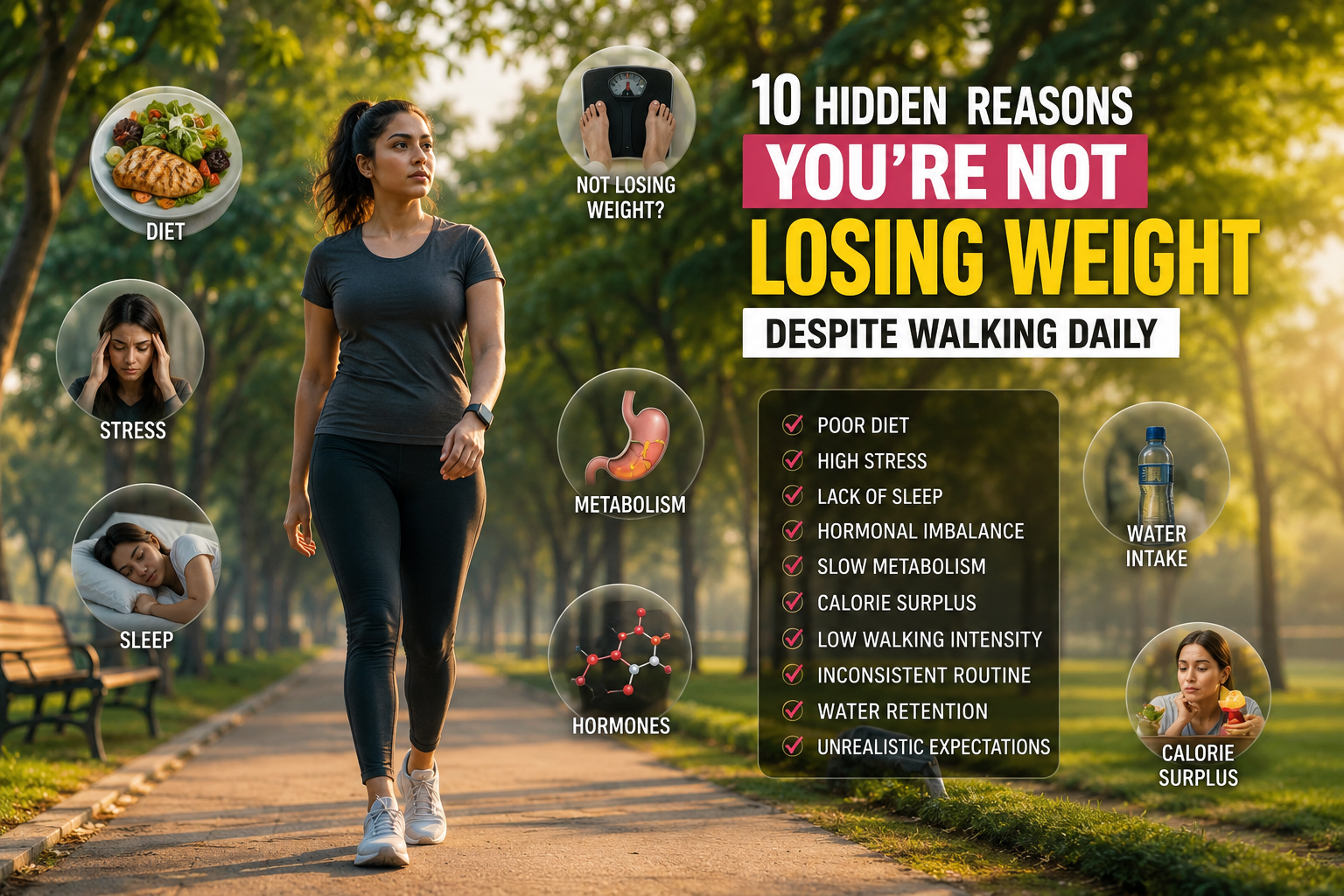
Walking is one of the best forms of exercise for weight loss, but why am I not losing weight even after walking daily is more common than many people realize. The reason is not always your walking routine. What you eat, how much you eat, your sleep quality, stress levels, and overall lifestyle all play an important role in your results. Above all, consistency matters. If your diet and daily habits are not aligned with your goals, walking alone may not produce the weight loss results you expect.
There is something special about a morning walk. The fresh air, quiet surroundings, and gentle movement can make you feel refreshed and energized for the day ahead. Walking among trees and listening to birdsong often creates a sense of calm and mental clarity. I have personally experienced how a peaceful walk can help clear the mind, reduce stress, and improve overall well-being.
However, while walking offers many physical and mental health benefits, successful weight loss depends on more than just daily steps. Many people walk regularly yet struggle to see changes on the scale. In this article, we’ll explore the hidden reasons why you may not be losing weight despite walking every day and what you can do to make your efforts more effective.
Can Walking Help You Lose Weight?
Yes, walking can help you lose weight, but the results depend on how consistently you do it and whether it is supported by healthy eating habits. Weight loss happens when your body burns more calories than it consumes, which is known as a calorie deficit. Walking can contribute to that deficit, but it is not always enough on its own.
Walking is especially beneficial for people who spend most of their day sitting and have limited physical activity. However, not all walking provides the same benefits. A short, very slow walk may not burn enough calories to make a significant difference. For better results, try to walk at a moderate pace where your breathing becomes slightly heavier, but you can still hold a conversation.
In my experience, one of the biggest mistakes people make is trying to do too much too soon. If your goal is to make walking a daily habit, start small. For example, if your target is to walk 1 kilometer, begin with 500 meters and gradually increase the distance over time. Starting with an intense routine on the first day can leave you feeling exhausted and less motivated to continue. Building a habit slowly is often more effective than pushing yourself too hard at the beginning.
Walking and running are both excellent forms of exercise. While running may burn more calories, walking is easier to maintain and suitable for people of almost all ages. The key is consistency. A moderate-paced walk performed regularly is usually more effective than occasional intense workouts.
If you’re wondering whether walking can specifically help reduce belly fat, you may find this guide helpful: Can Walking Help You Lose Belly Fat?
10 Hidden Reasons You’re Not Losing Weight Even After Walking Daily
Even if you are walking every day, several hidden factors can stop your weight loss progress. Many people focus only on exercise, but real results depend on multiple lifestyle and biological factors.
1. You’re Not Following a Sustainable Fitness Routine
Weight loss is not about short-term effort but long-term consistency. If your routine changes too often or you are unable to stick to it, results will naturally be slow. Building a sustainable fitness routine is more important than extreme workouts.
Walking and running are both effective for overall health and weight loss. However, consistency matters more than intensity alone. Regular daily movement, even at a moderate level, is more beneficial than irregular or extreme exercise sessions.
This is especially important for people who have low physical activity in their daily lives. For older adults, running may be difficult, but walking remains a safe and effective option. The key is to maintain a regular habit rather than focusing on occasional intense efforts.
Learn how to build a sustainable fitness routine
2. You May Be Eating More Than You Realize
Even healthy foods can contain extra calories, so portion control plays a major role in weight management. If your calorie intake is higher than what you burn, weight loss will not happen.
Eating healthy is very important for good health. Focus on home-cooked meals, reduce sugary foods, limit oily and junk food, and increase fruits, vegetables, and water intake. These small dietary changes can significantly support your weight loss journey and overall health.
3. Your Walking Intensity Is Too Low
Walking too slowly or for a very short duration may not burn enough calories to support weight loss. While any movement is better than no activity, intensity plays an important role in results.
A moderate to brisk walking pace is more effective for fat loss because it helps increase heart rate and improve calorie burning. If you can talk comfortably but feel slightly out of breath, that is usually the right intensity level for fat loss.
To get better results, try to gradually increase your walking speed or duration over time instead of staying at the same slow pace.
4. Stress and Cortisol Levels Are Affecting Your Body
High stress levels can increase cortisol, a hormone that can lead to fat storage, especially around the abdominal area. This is why stress management is just as important as exercise when it comes to weight loss.
Try to stay mentally calm and avoid unnecessary stress. Focus on positive thinking, avoid negative emotions like anger and hate, and try to live in the present moment. Maintaining a peaceful mindset supports both mental and physical health and can make your weight loss journey more effective.
Learn how exercise affects stress and cortisol levels:
5. Hormonal Imbalance May Be a Factor
Hormonal imbalance can be one of the hidden reasons behind slow weight loss. Conditions like PCOS can make it more difficult to lose weight even when you are following a healthy diet and regular exercise routine. Hormones play a major role in how your body stores and burns fat, and even small imbalances can affect your progress.
Many women struggle with weight loss due to hormonal changes without realizing the root cause. In such cases, focusing only on diet and walking may not yield the expected results unless the hormonal issue is also properly managed.
Related guide: Why Women with PCOS Struggle to Lose Weight
6. You’re Not Adding Strength or Resistance Exercise
Only walking may not be enough for effective weight loss. Strength training helps build muscle, and more muscle increases your metabolism, which supports faster fat burning even at rest.
Adding simple bodyweight exercises like squats, lunges, or light resistance workouts can significantly improve your results. It also helps tone the body and prevents weight loss plateaus over time.
7. You’re Relying on “Fat Burner” Shortcuts
Many people rely on fat-burning supplements or shortcuts instead of focusing on real and sustainable lifestyle changes. While these products may claim quick results, they are not a long-term solution for weight loss.
True and lasting fat loss comes from a balanced diet, regular physical activity, and consistent healthy habits. Quick fixes may show temporary effects, but they rarely support permanent results.
Read: Fat Burners for Women
8. Poor Sleep Is Slowing Down Fat Loss
Lack of proper sleep affects hunger hormones and increases cravings, making weight loss more difficult even if you exercise regularly. Poor sleep can also slow down your metabolism and reduce your energy levels throughout the day.
Getting enough quality sleep is important for recovery, better fat burning, and overall health. A consistent sleep routine can significantly improve your weight loss results.
9. You’re Not Consistent Enough
Doing walking for a few days and then stopping can break your progress. Consistency over weeks and months is what truly creates real and lasting change.
If you are relying only on walking for weight loss, regularity is very important. Walking for a few days, or even a week, and then stopping will not yield noticeable results. Along with exercise, your eating habits also matter. Eating in moderation, maintaining balance in meals, and avoiding late-night heavy meals all support better results.
Weight loss does not happen overnight. Your body needs time to adjust, and only consistent effort leads to visible improvement over time.
10. You Expect Fast Results
One of the biggest mistakes people make is expecting quick results from walking or any other form of exercise. Weight loss does not increase or decrease in a single day. It is a gradual process that requires time and patience.
Your body responds slowly to changes in activity and diet. Whether weight gain or weight loss, both take time to show visible results. If you are sensitive to your body’s signals, even small changes should be handled with patience instead of rushing for immediate results.
Instead of expecting fast changes, focus on consistency and long-term habits. That is what truly brings sustainable weight loss.
How Much Walking Is Best for Weight Loss?
The ideal amount of walking depends on your fitness level and daily routine. However, consistency is more important than extreme targets.
For beginners, starting with 5,000–7,000 steps per day is a good goal. As fitness improves, you can gradually increase it to 8,000–10,000 steps daily. Intermediate or more active individuals may aim for even higher step counts depending on their capacity.
The key is to stay consistent rather than overexerting yourself in the beginning.
Simple Tips to Make Walking More Effective
To get better weight loss results from walking, small improvements in your routine can make a big difference.
- Brisk Walking: Walk at a pace that slightly increases your heart rate.
- Interval Walking: Alternate between slow and fast walking for better fat burning.
- Protein Intake: Include enough protein in your diet to support muscle and metabolism.
- Strength Exercises: Add simple exercises like squats or lunges for better results.
- Hydration: Drink enough water throughout the day to support metabolism and energy.
Learn how to stay consistent with fitness for beginners:
Explore simple home workouts for weight loss beginners:
Sample Daily Routine for Faster Weight Loss
A simple and realistic daily routine can help you stay consistent and achieve better results.
- Morning: 30–45 minutes brisk walk
- Meals: Balanced diet with controlled portions
- Hydration: Drink water regularly throughout the day
- Evening: Light movement or short walk after dinner
Simple diet plan to support your routine:
7-Day Diet Plan for Weight Loss Beginners
FAQ – Why am I not losing weight even after walking daily?
Q1: Can walking alone help me lose weight?
Yes, but only if it is combined with a balanced diet and consistent routine.
Q2: How fast should I walk for fat loss?
A brisk pace where you can talk but feel slightly out of breath is ideal.
Q3: How long should I walk daily?
30–60 minutes of daily walking is generally effective for weight loss.
Q4: When will I see results?
Results vary, but most people notice changes in a few weeks with consistency.
Conclusion – Why Am I Not Losing Weight Even After Walking Daily?
Walking is one of the simplest and most effective ways to support weight loss, but why am I not losing weight even after walking daily is a common concern when results don’t show up. The reality is that walking works best when combined with consistency, proper diet, stress management, and an active lifestyle. Instead of focusing only on speed or intensity, building a long-term sustainable routine is the key to real and lasting weight loss results.
Disclaimer
This article is for informational and educational purposes only. It is not intended as medical advice. Weight loss results may vary from person to person depending on individual health conditions, lifestyle, and consistency. If you have any medical concerns or existing health conditions, please consult a qualified healthcare professional before making any major changes to your diet or exercise routine.