
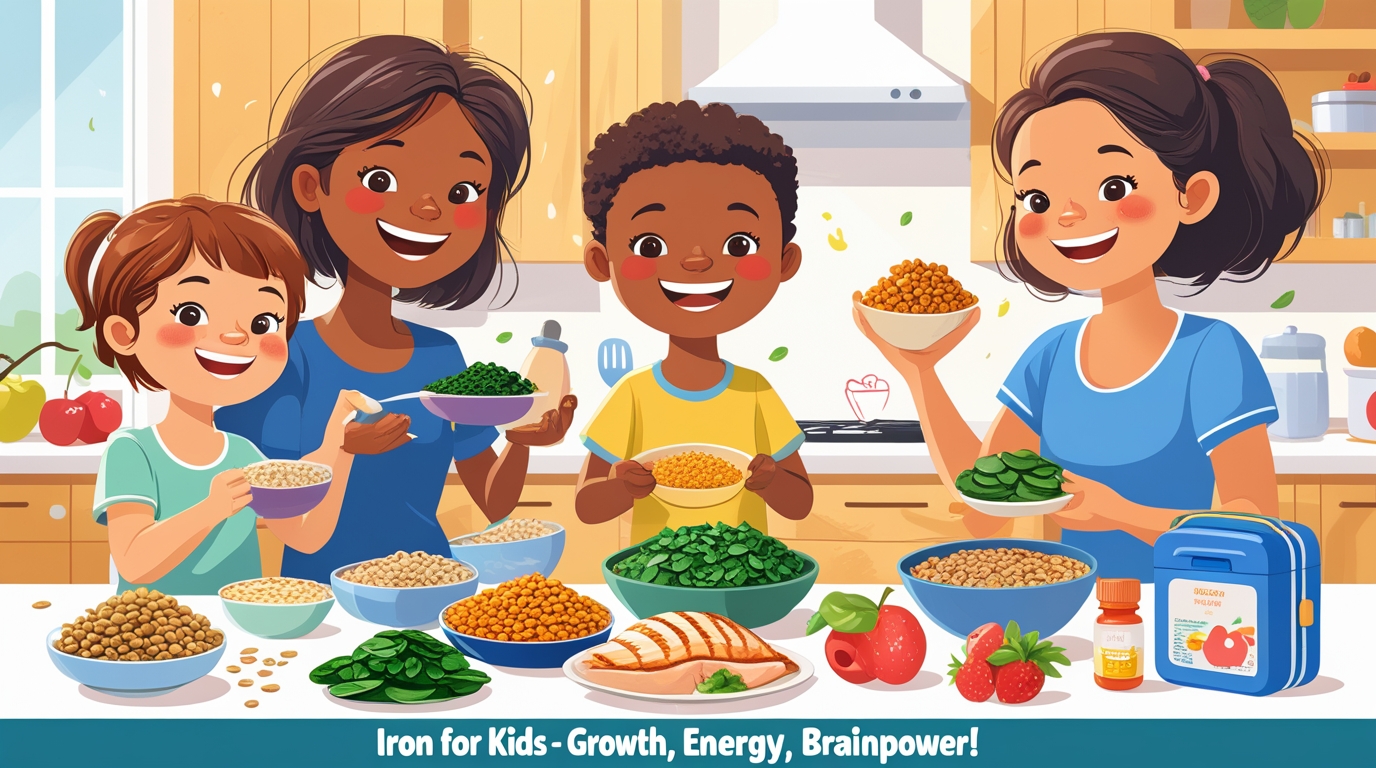
Introduction: Why Iron for Kids Is So Important
Iron for kids is one of the most important nutrients for healthy growth and development. It plays a key role in brain function, physical growth, and maintaining steady energy levels—especially during early childhood. Today, many parents face challenges like picky eating and unbalanced diets, which can increase the risk of iron deficiency in children.
The problem is that low iron levels often go unnoticed at first. Symptoms such as tiredness, poor concentration, or low appetite may develop slowly, making it difficult to identify the issue early. That’s why understanding the importance of iron for kids is essential for every parent.
In this guide, you’ll learn why iron matters, how to recognize signs of deficiency, and discover simple, kid-friendly foods that can help improve your child’s iron intake naturally.
Affiliate Disclosure: This article may contain affiliate links. If you make a purchase through these links, we may earn a small commission at no extra cost to you. This helps support our website and allows us to provide more nutrition tips for kids.
What Is Iron and Why Do Kids Need It?
Iron is one of the most essential minerals for children. It helps their body and brain function properly, supports healthy growth, and ensures they have enough energy to stay active throughout the day.
Hemoglobin, a protein found in red blood cells that transports oxygen throughout the body, is made from iron. Iron is particularly crucial for children because:
- Supports physical growth and development
- Helps with cognitive development and learning
- Keeps energy levels steady
Without enough iron for kids, children may develop anemia or experience low energy, which can interfere with everyday activities and learning.
Signs of Iron Deficiency in Kids
Here are common symptoms of low iron levels:
- Fatigue or unusual tiredness
- Pale skin
- Poor appetite
- Irritability
- Slow weight gain or growth
- Cold hands and feet
Get your child tested by a pediatrician if they exhibit these symptoms.
Explore more: Iron Deficiency Symptoms in Women – Symptoms may overlap with those in children.
What Happens if Kids Don’t Get Enough Iron?
Children who don’t get enough iron for kids may experience a variety of health problems. Iron deficiency can weaken the immune system, making kids more prone to infections. It can also affect attention span, learning ability, and overall development.
Long-term iron deficiency may even influence behavior and intellectual growth. Early detection and proper nutrition are key to preventing these serious issues.
Tip for parents: Regular check-ups and monitoring your child’s diet can help prevent iron deficiency before it becomes a bigger problem.
Iron for Kids: How Much Do They Need?
The recommended daily intake of iron for kids varies by age:
| Age Group | Daily Iron Requirement |
| 1–3 years | 7 mg |
| 4–8 years | 10 mg |
| 9–13 years | 8 mg |
| Teenage girls (14–18) | 15 mg |
Note: Teenage girls need more iron due to menstruation, which can increase iron loss.
Iron for Kids: Best Sources of Iron
Getting enough iron for kids is easier than you might think. Children can get iron from two main types of dietary sources:
1. Heme Iron (from animal sources) – easily absorbed by the body
2. Non-Heme Iron (from plant sources) – absorbed less efficiently, but still very valuable
Iron-Rich Animal Foods
Iron-Rich Animal Foods (Heme Iron)
These are excellent sources of iron for children and are absorbed more efficiently by the body:
- Beef, chicken, and turkey
- Liver (in moderation)
- Fish (like tuna or salmon)
Tip: Pairing these foods with a small amount of vitamin C, like tomatoes or bell peppers, can improve absorption.
Iron-Rich Plant-Based Foods
Iron-Rich Plant-Based Foods (Non-Heme Iron)
Plant-based sources are also important for kids, especially for vegetarian or picky eaters:
- Lentils and beans
- Tofu
- Fortified cereals
- Spinach and broccoli
Tip: Combine plant-based iron with vitamin C-rich foods (like oranges or strawberries) for better absorption.
Explore more: Iron-Rich Foods
Try this: Iron-Fortified Cereal for Kids on Amazon
Easy Iron-Rich Foods Kids Will Actually Eat
1. Iron-fortified cereal with Strawberries
2. Mini Turkey Meatballs
3. Spinach and Cheese Quesadillas
4. Lentil Soup with Carrot Sticks
5. Tofu Nuggets with Ketchup
6. Homemade Iron Gummies (from molasses + orange juice)
Make cooking colorful and entertaining by letting your children choose the ingredients or by using shapes.
For more ideas on nutritious meals, check out our full guide on Healthy Eating Habits for Children.
Bonus Recipe: Iron-Boost Banana Muffins
Iron-Boost Banana Muffins
These soft, sweet muffins are packed with iron and perfect for picky eaters. They make a fun and nutritious snack that supports healthy growth.
Tip: Pair with a glass of orange juice to improve iron absorption for kids.
Ingredients:
- 1 cup whole wheat flour (iron-rich)
- 1 mashed ripe banana
- 2 tbsp blackstrap molasses (rich in iron)
- 1 egg
- ¼ cup brown sugar
- ¼ cup vegetable oil
- ½ tsp baking soda
- ¼ cup orange juice (vitamin C for better iron absorption)
Instructions:
- Preheat oven to 180°C (350°F) and line a muffin tray.
- Mix all ingredients in a bowl until smooth.
- Fill muffin cups ¾ full.
- Bake for 18–20 minutes until golden and fluffy.
These muffins sneak in iron for kids while tasting delicious. Fun shapes or colorful toppings make them even more appealing to children.
Preventing Iron Deficiency in Children
Preventing iron deficiency in kids starts with smart meal planning and regular monitoring. Here are simple steps to ensure your child gets enough iron every day:
- Limit cow’s milk in toddlers – too much milk can block iron absorption.
- Avoid excessive calcium during iron-rich meals – calcium can interfere with iron uptake.
- Add a vitamin C source with each meal – oranges, strawberries, and tomatoes improve iron absorption.
- Schedule regular blood tests for children at risk of iron deficiency, especially picky eaters or teens.
Following these tips consistently can help your child stay healthy, energetic, and focused.
Should You Give Kids Iron Supplements?
Iron supplements can be useful, but only under medical guidance. Too much iron can be harmful, so it’s important to follow a pediatrician’s advice.
- Give supplements only if prescribed.
- Pair with fruit juice, not milk, to enhance absorption.
- Choose chewable or flavored supplements for easier intake by children.
For picky eaters or children with diagnosed deficiencies, supplements can help meet the daily iron requirements for kids safely.
Explore more: Best Time to Take Iron Supplements
Also read: Vitamin D Guide for Americans, Magnesium Benefits, High Calcium in Blood
Recommended: Children’s Iron Supplement on Amazon – Great-tasting chewables made for kids.
FAQs – Iron for Kids
Q1. What foods are highest in iron for kids?
Excellent sources include beans, tofu, spinach, lentils, beef, and fortified cereals. Pairing plant-based foods with vitamin C helps improve absorption.
Q2. Can too much milk cause low iron in toddlers?
Yes. Excessive milk can interfere with iron absorption and reduce appetite, increasing the risk of deficiency.
Q3. How do I know if my child needs more iron?
Watch for signs such as fatigue, pale skin, irritability, or reduced appetite. Always consult a pediatrician for a blood test if concerned.
Q4. Are iron supplements safe for kids?
Only when prescribed by a doctor. Too much iron can be toxic. Follow dosage instructions carefully.
Q5. Can picky eaters get enough iron from food?
Yes, with creative recipes, iron-fortified cereals, and plant-based iron sources combined with vitamin C.
Conclusion
In 2026, ensuring your child gets enough iron for kids is one of the simplest and most important ways to support healthy growth, brain development, and energy.
From iron-rich recipes to smart nutrition habits and regular monitoring, small changes in daily meals can prevent deficiency and keep children active and focused.
Remember: Early detection and balanced diet are key. Prevention is always better than cure.
Call to Action: Want more kid-friendly nutrition tips? Explore more on Iron Deficiency or Iron Deficiency vs. Anemia, and don’t forget to bookmark us!
Disclaimer: This article is for informational purposes only and is not a substitute for medical advice. Always consult your pediatrician for personalized guidance.
Last Updated: Jun 8, 2026
Recent Comments