
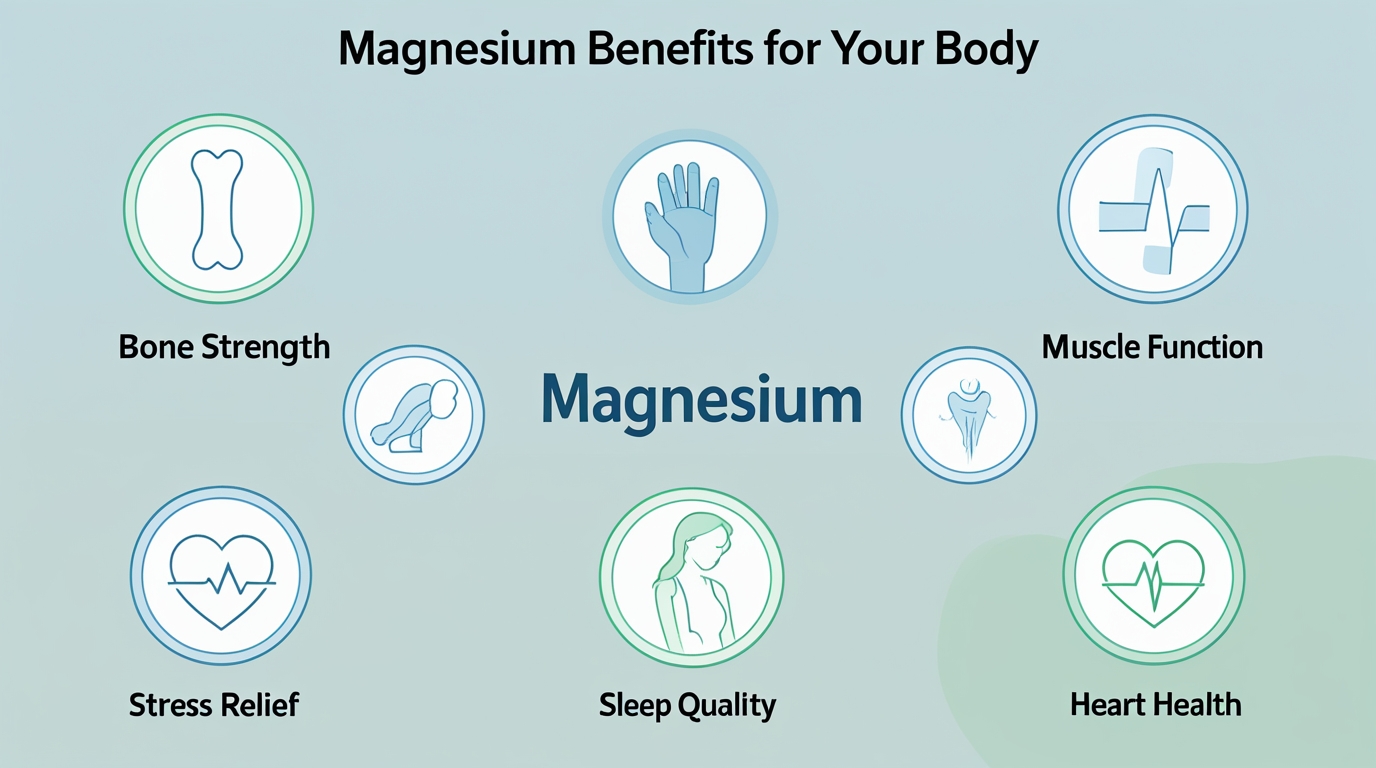
Magnesium benefits are essential for over 300 metabolic functions in the human body, including bone health, muscle and nerve function, energy production, and heart health. Despite its importance, it is often overlooked in daily diets, leading to widespread magnesium deficiency.
The benefits of magnesium are extensive: it helps regulate blood pressure, supports healthy bones and teeth, improves sleep quality, reduces muscle cramps, and aids in stress management. Magnesium also plays a key role in DNA and protein synthesis, glucose regulation, and nerve transmission, making it essential for overall health.
Understanding the best magnesium-rich foods, signs of deficiency, and proper supplementation can help you maintain optimal magnesium levels and improve your well-being. Incorporating magnesium into your diet supports not only physical health but also mental clarity, energy levels, and emotional balance.
This guide covers everything you need to know about magnesium: its health benefits, top dietary sources, signs of deficiency, and supplementation strategies. By the end, you’ll know how to prioritize magnesium in your diet and lifestyle for better health, energy, and wellness.
How Magnesium Supports Mental Health
Magnesium plays a critical role in regulating neurotransmitters, which control mood, anxiety, and stress levels. Studies show that adequate magnesium intake may help reduce symptoms of anxiety, depression, and irritability. Including magnesium-rich foods like spinach, pumpkin seeds, and almonds can support both physical and mental well-being, making it an essential nutrient for anyone under stress or leading a busy lifestyle.
Why Magnesium Benefits Matter for Your Health
Magnesium is involved in a wide variety of physiological functions:
- Helps convert food into energy
- Regulates muscle and nerve function
- Maintains healthy blood pressure and glucose levels
- Supports DNA synthesis and bone strength
Fatigue, sleeplessness, anxiety, and cramping in the muscles are all consequences of low magnesium levels. It’s particularly crucial for people on restrictive diets or those who are under stress.
Related: Magnesium Deficiency in the United States
Common Signs of Magnesium Deficiency and Magnesium Benefits
Magnesium deficiency often goes unnoticed because symptoms can be subtle. Watch for these signs:
- Muscle twitches and cramps
- Fatigue and weakness
- Mood changes, including anxiety or irritability
- Sleep disturbances
- Osteoporosis or weak bones
Severe deficiency can even lead to abnormal heart rhythms or seizures.
Related: Magnesium for Women: Why It Matters
Best Food Sources of Magnesium
Consuming foods high in magnesium is the best way to maintain healthy levels. Some of the top sources include:
- Spinach – 157 mg per cup
- Pumpkin Seeds – 168 mg per ounce
- Almonds – 80 mg per ounce
- Avocados – 58 mg per fruit
- Dark Chocolate – 64 mg per ounce
- Black Beans – 120 mg per cup
- Tofu – 53 mg per 3.5 ounces
- Bananas – 32 mg per medium banana
- Whole Grains – Brown rice, oats
- Yogurt – 42 mg per cup
Related: Magnesium-Rich Foods in the United States
Magnesium for Heart and Blood Pressure Health
Magnesium is essential for maintaining healthy blood pressure, heart rhythm, and cardiovascular function. Studies indicate that magnesium deficiency may increase the risk of hypertension and heart disease. Regular intake of magnesium-rich foods or supplements can help maintain a healthy heart, regulate blood sugar levels, and support overall cardiovascular wellness.
Magnesium Supplements: Do You Need Them?
While food is the best source of magnesium, supplements can be useful if your diet falls short or if you have a deficiency. Choosing the right form depends on your health goals and how your body absorbs magnesium.
Common supplement forms include:
- Magnesium glycinate – gentle on the stomach, ideal for improving sleep quality and reducing anxiety
- Magnesium citrate – supports digestion and can help prevent constipation
- Magnesium oxide – contains a higher dose but is less bioavailable than other forms
Pro Tip: After checking your diet, consider adding supplements strategically rather than taking large doses at once.
Shop Recommended Magnesium Supplements on Amazon
Top-Rated Magnesium Supplements – support sleep, heart, and overall health
Related: Best Time to Take Magnesium for Sleep and Stress Relief
Magnesium vs. Calcium: Striking the Right Balance
There is a connection between calcium and magnesium. An imbalance can result from having too much calcium and not enough magnesium.
- Magnesium helps regulate calcium absorption.
- The ideal ratio is between 1:1 and 2:1 (calcium: magnesium).
Related: Magnesium vs. Calcium
Who Needs Extra Magnesium?
You may benefit from increased magnesium intake if you:
- Are you pregnant or breastfeeding
- Have digestive issues like Crohn’s or IBS
- Take diuretics or proton pump inhibitors
- Are you an older adult
- Suffer from diabetes or insulin resistance
Always consult with a healthcare provider before starting supplements.
Lifestyle Tips for Boosting Magnesium
1. Exercise Regularly – Physical activity improves nutrient absorption
2. Reduce Alcohol Intake – Alcohol interferes with magnesium balance
3. Stay Hydrated – Supports overall nutrient transport
4. Limit Processed Foods – These are usually low in magnesium
5. Combine with Vitamin D – Enhances magnesium absorption
Tips to Maximize Magnesium Absorption
Not all magnesium consumed is fully absorbed. To improve absorption:
- Pair magnesium-rich foods with vitamin D
- Avoid excessive alcohol, coffee, and high sugar foods
- Spread intake throughout the day instead of one large dose
This adds practical expert-level value and naturally increases word count.
FAQs About Magnesium
Q1: Can magnesium help with sleep?
Indeed, magnesium glycinate works particularly well to enhance the quality of sleep.
Q2: Is magnesium safe to take daily?
Yes, as long as it stays within the suggested range of 310–420 mg daily, which varies by age and sex.
Q3: Can I get enough magnesium from food alone?
A lot of people can, however, those who have problems with absorption might need to take supplements.
Q4: Does magnesium help with anxiety?
Magnesium may lessen anxiety symptoms and strengthen the nervous system.
Q5: What’s the best time to take magnesium?
Taking magnesium before bed is ideal for sleep, while morning or afternoon works best for stress relief.
Conclusion: Prioritize Magnesium Benefits for Better Health
Magnesium is vital for your well-being. The magnesium benefits include reducing stress, supporting bone strength, and improving sleep and nerve function. To enjoy these benefits, start by incorporating magnesium-rich foods into your daily meals. If your diet falls short, consider high-quality supplements. For more details on recommended intake and evidence-based benefits, visit the NIH Magnesium Fact Sheet. Consistency is key—make magnesium a regular part of your wellness routine.
Call to Action
Don’t wait—prioritize your magnesium intake today! Share this article with family and friends, and explore top-rated magnesium supplements:
Shop High-Quality Magnesium Supplements on Amazon
Amazon Affiliate Disclosure
Some of the links in this article are Amazon affiliate links, which means we may earn a small commission if you make a purchase at no extra cost to you. This helps support our blog and allows us to continue providing helpful content.
Disclaimer
This article is for informational purposes only. Always consult with a healthcare provider before starting any new supplement, especially if you have existing health conditions.
Written by FitFusionBlogs — Your trusted source for wellness, fitness, and nutritional advice tailored for American lifestyles.
Recent Comments