
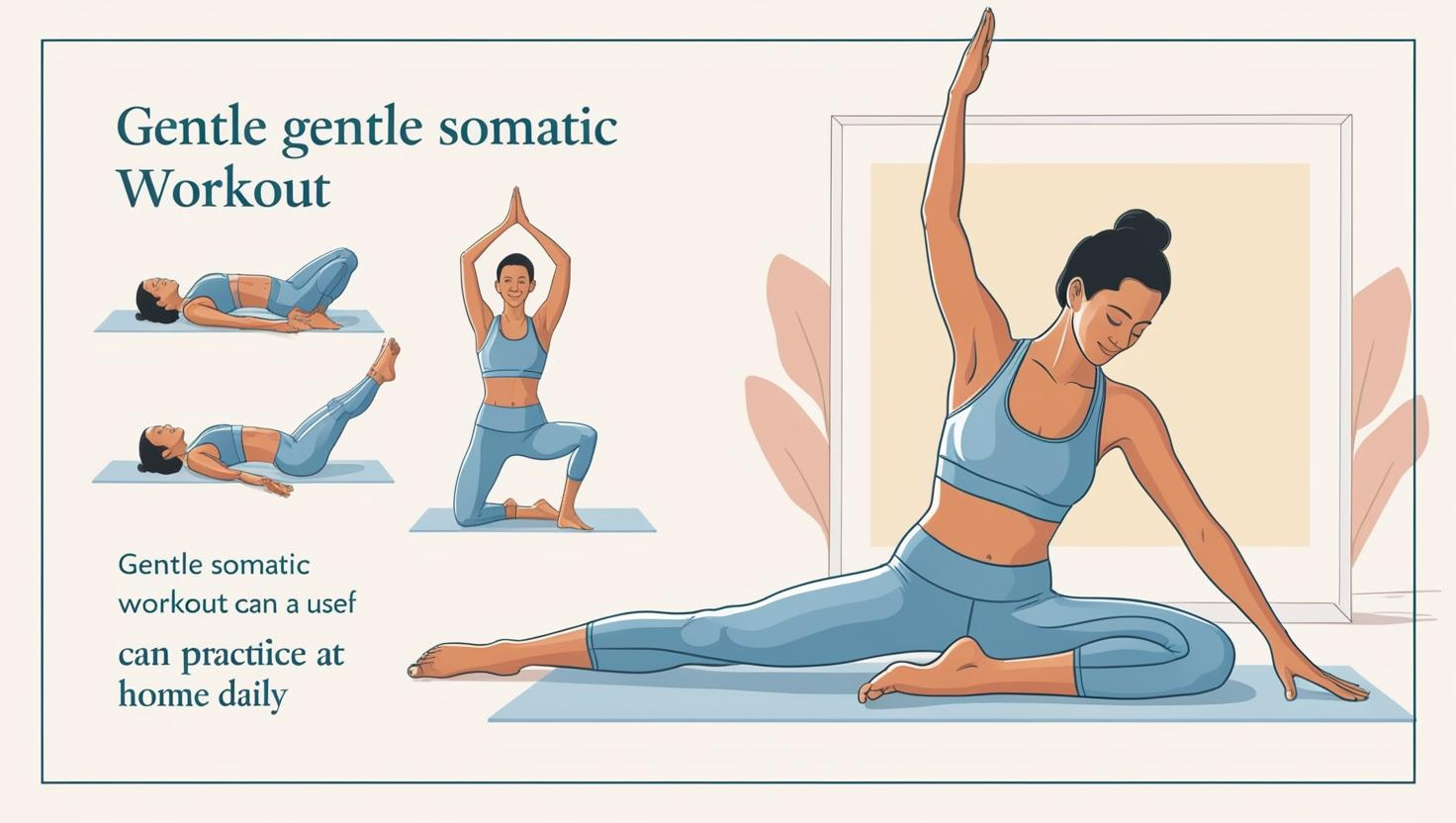
Why a Gentle Somatic Workout at Home Is Life-Changing
You’re not alone if you frequently feel as though your body is rigid, tight, or detached. Our bodies retain tension in ways we might not even be aware of due to prolonged desk work, everyday stress, and a lack of conscious exercise. This is where a gentle somatic workout you can practice at home daily becomes a powerful tool.
Instead of emphasising outward performance, somatic movement emphasises inward body awareness. These exercises, which don’t require expensive equipment or any prior fitness expertise, can relieve accumulated stress, enhance posture, and encourage deep relaxation. This daily at-home practice is your new best buddy, regardless of your level of experience or desire for a gentle form of movement. You can also combine it with a gentle morning exercise routine to improve flexibility and energy levels throughout the day.
What Is a Gentle Somatic Workout?
A series of slow, deliberate movements that concentrate on the internal sensations of your body make up a gentle somatic workout. Somatic techniques place more emphasis on feeling, respiration, and nervous system modulation than standard workouts that emphasise repetitions or intensity.
Key elements:
- Slow, deliberate motions
- Awareness of breath
- Pay attention to how your body feels rather than how it looks.
- No equipment is required.
- Simple to complete at home
Benefits of a Daily Gentle Somatic Workout at Home
Incorporating a gentle somatic workout you can practice at home daily offers numerous physical and emotional benefits:
- lessens anxiety and tension
- Enhances the quality of sleep
- Releases stored trauma and tense muscles
- Enhances mobility and flexibility
- Improves posture and body alignment
- Promotes mindfulness and body awareness
Gentle Somatic Workout You Can Practice at Home Daily (Step-by-Step)
All you need is a mat (or towel), a peaceful place, and a few minutes of your time.
1. Pelvic Tilt and Release
- Bend your knees and lie on your back.
- Tilt your pelvis back and forth gently.
- Flatten your lower back by feeling its arch.
- For eight to ten breaths, repeat slowly.
2. Cat-Cow Flow (Somatic Style)
- Breathe in and arch your back (cow), then exhale and turn around (cat) while on all fours.
- Go more slowly than normal. Feel every part of the spine.
- Keep going for a minute or two.
3. Somatic Shoulder Rolls
- Comfortably sit or stand.
- Roll your shoulders back and forward slowly.
- Breathe deeply while moving.
4. Head Nods and Turns
- Either sit up straight or lie on your back.
- Nod the head slowly in “yes,” then turn it side to side in “no.”
- Focus on releasing neck tension.
5. Side Bends
- While seated or standing, slowly stretch one arm overhead and bend sideways.
- Maintain a gentle, flowing motion.
- Three or four times, repeat each side.
6. Constructive Rest Position
- End your session lying down with your knees bent, feet on the floor.
- Focus on your breath and how your body feels for 2–3 minutes.
How to Make It a Daily Habit
Here are some quick tips to help make your daily gentle somatic workout at home a consistent habit:
- Do it right before bed or in the morning.
- Set an alarm or reminder
- Make a relaxing environment with soft music and dark lighting.
- Record your feelings in a journal following each session.
- If voice teaching is more your style, try guided audio.
1. Why Somatic Workouts Are Different from Regular Exercise
Somatic workouts focus on internal body awareness, breath, and nervous system regulation, unlike typical exercises that focus on speed or intensity. Understanding this difference helps you approach each movement mindfully and get maximum benefits.
2. Common Mistakes to Avoid in Gentle Somatic Workouts
Even gentle routines can be less effective if done incorrectly. Avoid rushing through movements, holding tension, or skipping the relaxation phase to get the most out of your daily practice.
3. Best Time of Day for Your Daily Somatic Workout
Whether you prefer mornings to start your day calmly or evenings to unwind, choosing a consistent time helps make your routine a habit and improves mental clarity, sleep, and energy levels.
4. Equipment and Space You Actually Need
All you need is a yoga mat, towel, or soft surface. No fancy equipment is required. Creating a small, quiet space for practice enhances focus and relaxation. You can also try a 5-minute yoga stress relief routine to make your practice even more calming and effective.
5. How Gentle Somatic Workouts Support Mental Health
Beyond physical benefits, somatic exercises can reduce anxiety, relieve stress, and promote mindfulness, making it a simple yet powerful tool for overall emotional well-being. For a deeper understanding of how movement and lifestyle can help manage stress and anxiety, you can also read about anxiety management in 2026.
Who Should Try This Somatic Workout?
A gentle somatic workout is suitable for almost everyone, especially people who want to improve their body awareness and reduce daily stress without intense exercise.
You should try this practice if you are:
- Office workers who sit for long hours and experience body stiffness
- Beginners who are new to fitness and want a safe starting point
- People dealing with stress, anxiety, or mental fatigue
- Individuals experiencing tight muscles, body stiffness, or poor posture
- Anyone looking for a gentle, low-impact daily movement routine
This simple practice fits easily into any lifestyle and can be done at home without equipment.
FAQ: Gentle Somatic Workout You Can Practice at Home Daily
Q1: Is somatic movement good for beginners?
Of course! All fitness levels can benefit from it, but beginners, the elderly, and those recuperating from ailments will particularly enjoy it.
Q2: How long should a daily somatic workout be?
You can noticeably improve your flexibility, attitude, and relaxation with just 10 to 20 minutes a day.
Q3: Can I do somatic exercises even if I’m not flexible?
Indeed! Flexibility is not necessary. Instead of requiring stretches, somatic workouts increase mobility by relieving tension.
Q4: Is it okay to do this every day?
It’s gentle enough to practise every day, yes. Consistent practice actually improves outcomes over time.
Conclusion: Start Your Daily Somatic Journey Today
In today’s fast-paced world, choosing to slow down is a powerful and transformative choice. By practicing a gentle somatic workout at home daily, you’re not just nurturing your body — you’re also supporting your nervous system, enhancing mental clarity, and promoting emotional balance.
You don’t need a gym, a personal trainer, or a formal program — just the willingness to listen to your body and move mindfully. Begin with this simple routine, and over time, you’ll notice reduced tension, better posture, and a calmer mind.
For more guidance on creating long-term fitness habits, check out how to build a sustainable fitness routine for 2026.
Start your gentle somatic routine today for just 10–15 minutes daily and stay consistent for 7 days to feel real improvements in your body and mind.
Your body — and mind — will thank you!
Recent Comments