
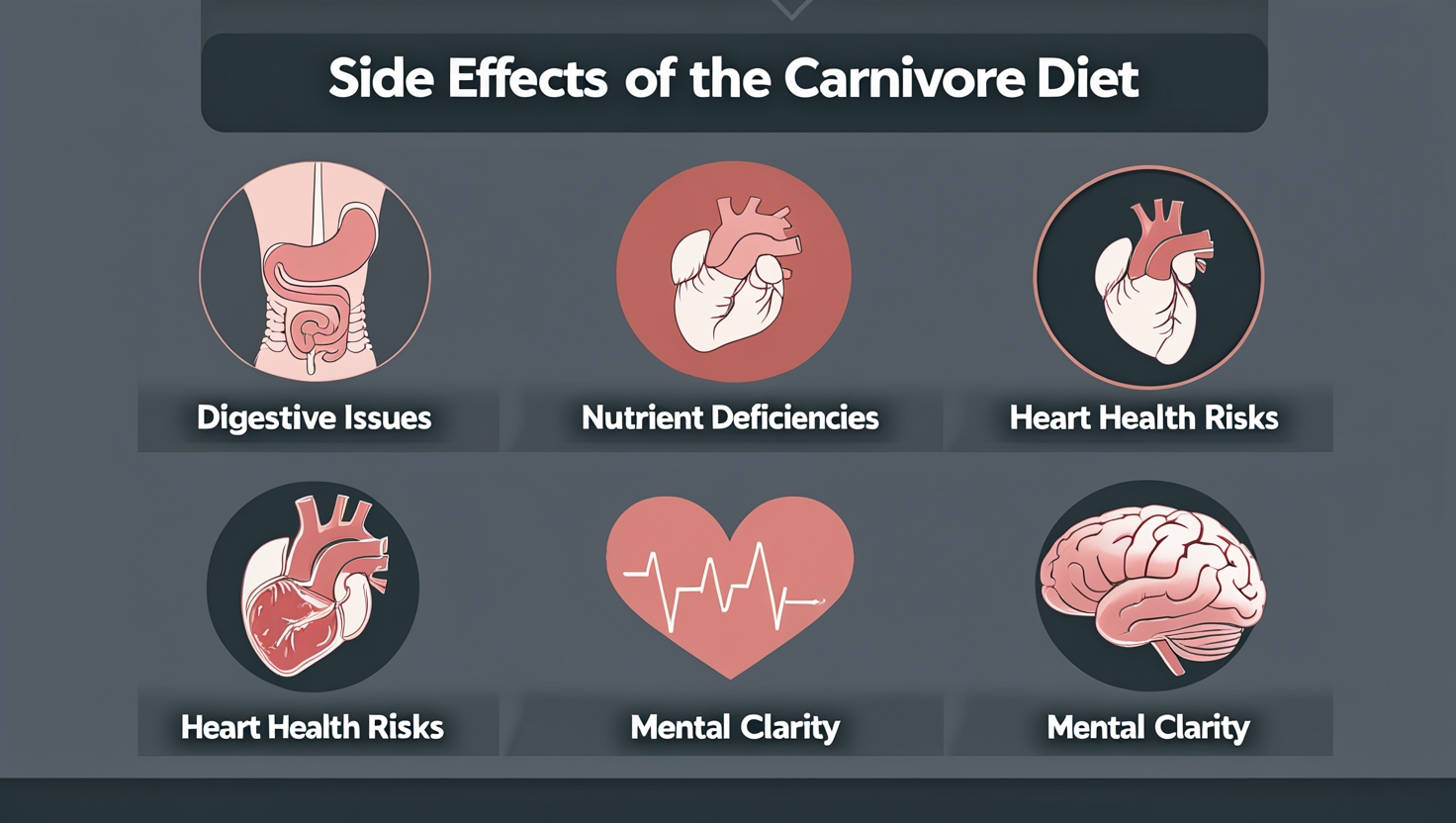
Introduction: Is the Carnivore Diet Really Safe?
The carnivore diet is becoming increasingly popular, but it is important to understand its side effects before starting. This strict eating plan eliminates all plant-based foods and focuses entirely on animal products, such as meat, fish, eggs, and, in some cases, dairy.
While many people report benefits such as weight loss, improved mental clarity, and reduced inflammation, it’s important to look at the full picture. Like any restrictive diet, it may come with certain risks that should not be ignored.
In this guide, we’ll explore the possible side effects of the carnivore diet, backed by research and real-world experiences, so you can make an informed and balanced decision.
Thinking about going carnivore? Here are the side effects you should know first.
Carnivore Diet Side Effects You Should Know
1. Carnivore Diet Side Effects on Digestion: Fiber Deficiency Problems
Constipation is among the most common adverse effects people encounter. Due to the Carnivore Diet’s exclusion of foods high in fiber, such as fruits, vegetables, legumes, and whole grains, many people experience bloating, irregular bowel movements, and digestive pain. A chronic lack of fiber can also have a detrimental effect on gut health.
2. Vitamin and Mineral Deficiencies
Eliminating entire food groups may lead to shortfalls in essential nutrients like:
- Vitamin C (from fruits/vegetables)
- Vitamin K, E, and Magnesium
- Potassium and Folate
This can result in symptoms such as fatigue, poor immune function, or even impaired bone health. Source: Healthline
3. Heart Health Concerns
Eating large amounts of red and processed meats, which are often high in saturated fat, may contribute to increased LDL (bad) cholesterol levels over time. Elevated LDL cholesterol is considered a risk factor for cardiovascular diseases, including heart-related conditions. While some individuals following high-meat diets report short-term benefits, health experts suggest that the long-term effects of such eating patterns are still being studied and debated within the medical community.
Source: Harvard Health Publishing (Harvard Medical School)
4. Kidney and Liver Strain
Your kidneys may be under stress from a high-protein diet, particularly if you already have renal disease. Because extra nitrogen from amino acids must be processed, consuming too much protein may also raise the risk of renal stones and liver load.
5. Increased Risk of Certain Cancers
An increased risk of colon cancer has been associated with excessive consumption of red and processed meats. Processed meats are classified as carcinogenic by the World Health Organization (WHO), which warns anyone who regularly eats them to exercise caution.
6. Mood Swings and Mental Fatigue (Initially)
During the first few weeks, cutting off carbohydrates might lead to mood swings, irritation, and low energy. Your body and brain are adapting to using fats as the primary energy source rather than glucose, which is why this is frequently referred to as the “keto flu.”
7. Bad Breath and Body Odor
Your body may release pungent substances like acetone through perspiration and breath as a result of ketosis. People on ketogenic or zero-carb diets frequently experience this, which can be awkward in social situations.
8. Lack of Dietary Variety
Consuming the same few foods over and over again can lead to boredom, dissatisfaction, and social isolation. Long-term maintenance of this diet is extremely challenging, particularly in the absence of adequate preparation and medical monitoring.
9. Bone Health Risk
Over time, bone density may decrease if adequate intake of calcium, magnesium, and vitamin K2 is not maintained. Additionally, some research suggests that excessive meat consumption might cause acidic diets that weaken bones by removing nutrients.
10. Negative Environmental Impact
“Even though it’s not a physical symptom, it’s important to note that diets high in animal products have a larger carbon footprint and contribute more to climate change than plant-based diets.”
Who Should Not Try the Carnivore Diet?
The Carnivore Diet is not recommended for:
- People with kidney or liver disease
- Those with a history of heart problems
- Individuals with gout or high uric acid levels
- Anyone pregnant or breastfeeding (due to increased nutritional needs)
Balanced Alternatives to Consider
If you’re interested in low-carb diets but concerned about potential side effects, exploring alternative approaches can help you find a more balanced and sustainable option:
- Carnivore vs Keto Diet– Compare the flexibility of both diets. While the carnivore diet is more restrictive, the keto diet allows some plant-based foods, making it easier for many people to follow long-term.
- 7-Day Carnivore Meal Plan – A structured plan can help you stay consistent and reduce confusion. It provides simple, practical meal ideas to make your carnivore journey easier.
- Carnivore Diet for Mental Clarity – Some people follow this diet to improve focus and brain function. Learn how it may affect cognitive performance and energy levels.
- Carnivore Diet for Weight Loss– Many individuals try this approach for rapid fat loss. Explore how it works and whether it’s sustainable for long-term results.
FAQs – Carnivore Diet Side Effects
Q1: How long do the side effects of the Carnivore Diet last?
In the first 1–3 weeks, most people experience symptoms such as fatigue and digestive issues. These symptoms often improve as the body adapts, although some may continue if nutrient intake is not properly managed.
Q2: Can supplements prevent nutrient deficiencies?
Yes, supplements such as vitamin C, magnesium, electrolytes, and fiber are commonly used. However, supplementation should be discussed with a healthcare professional to ensure safety and proper dosage.
Q3: Is the Carnivore Diet good for weight loss?
The Carnivore Diet may lead to short-term weight loss due to reduced calorie and carbohydrate intake. However, its long-term effectiveness and sustainability are still debated among health experts.
Q4: Will I get enough energy without carbs?
Some people adapt well to using fat as their primary energy source, while others may experience low energy levels or reduced exercise performance, especially during the adjustment phase.
Q5: Should I consult a doctor before starting?
Yes, it is strongly recommended. The Carnivore Diet may interact with existing health conditions or medications, so medical guidance is important before starting.
Final Thoughts: Is It Worth the Risk?
The Carnivore Diet has gained popularity due to its simplicity and dramatic short-term results. However, there are potential drawbacks that should not be ignored. While some individuals may thrive on a meat-heavy diet, the long-term health effects are still not fully understood. Possible risks include heart disease, digestive issues, and nutrient deficiencies.
Our advice is simple: don’t go it alone. Speak with a certified nutritionist or healthcare professional, monitor your health closely, and listen to your body throughout the process.
Have you tried the Carnivore Diet? Share your experience in the comments or ask any questions you may have.
For more expert-backed health and fitness content, visit FitFusionBlogs.com for guides, meal plans, and practical wellness tips.
If you found this helpful, save or share it with someone considering the Carnivore Diet.