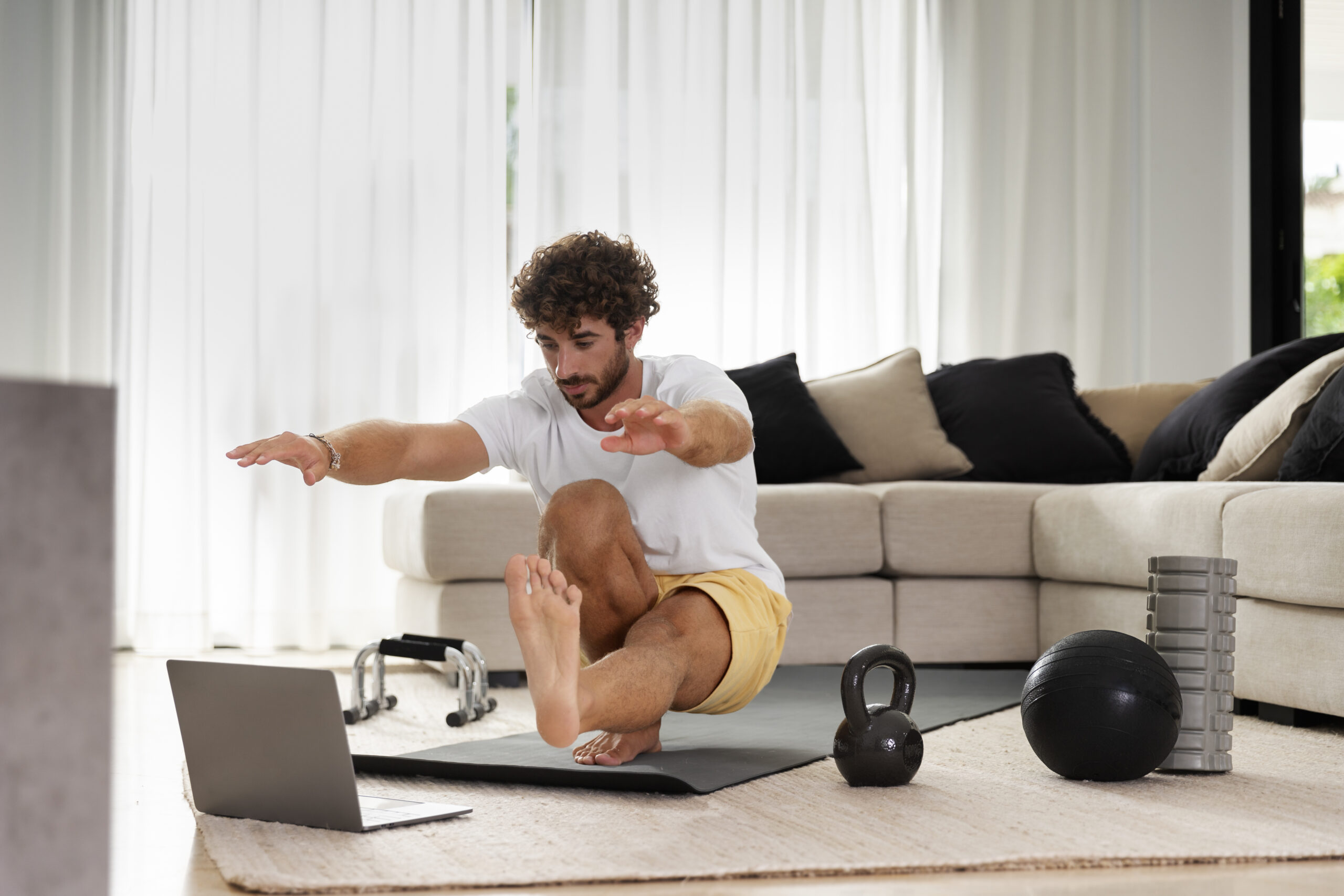
Starting a Beginner Exercise Routine at Home can feel challenging, especially if you are new to fitness. Many beginners assume that effective workouts require expensive gym equipment or complex routines, but this is not true. With a carefully planned routine, simple bodyweight exercises, and consistent effort, anyone can build strength, improve stamina, and enhance overall health without leaving their home. Home workouts without equipment guide. This guide will provide detailed exercises, tips, and strategies for beginners to build a strong fitness foundation, all without specialized equipment.
Why You Should Start a Beginner Exercise Routine at Home
Exercising at home has unique advantages that make it easier for beginners to stay consistent. First, it eliminates the need to commute to a gym, saving both time and money. You can fit a workout into your schedule at any time of day, whether early in the morning or late at night, without worrying about gym hours. Home workouts also provide a private environment, which is perfect for those who feel self-conscious starting a new fitness routine. Finally, exercising at home can be highly flexible—you can adapt the intensity, duration, and type of exercise to suit your personal fitness level. For beginners interested in workouts specifically targeting weight loss, check out Easy Weight Loss Exercises at Home, which provides a variety of beginner-friendly movements.
Warm-Up: Preparing Your Body for Exercise
Before starting any workout, warming up is essential. A proper warm-up increases blood flow to your muscles, improves flexibility, and reduces the risk of injury. Begin with 5–10 minutes of light cardio such as jogging in place, jumping jacks, or high knees. Follow this with dynamic stretches like arm circles, leg swings, or torso twists to prepare all major muscle groups. Spending this time on warm-up ensures your body is ready for more challenging exercises, and even beginners will notice improved performance and reduced soreness after workouts.
Beginner-Friendly Home Exercises
Below is a comprehensive beginner routine that targets all major muscle groups and requires no equipment. Each exercise includes detailed instructions, tips for proper form, and suggested repetitions.
1. Squats
Squats are a cornerstone of lower-body workouts. They primarily engage the quads, hamstrings, and glutes while also activating your core. Stand with your feet shoulder-width apart, keep your back straight, and lower your hips as if sitting in a chair. Avoid letting your knees go past your toes. Beginners should aim for 3 sets of 12–15 repetitions. Squats not only strengthen your legs but also improve balance and mobility over time. For more detailed guidance on proper squat technique and benefits, check out this guide from Healthline.
2. Push-Ups
Push-ups are excellent for building upper-body strength. They target the chest, triceps, shoulders, and core simultaneously. Begin in a plank position with your hands directly under your shoulders. Lower your body slowly until your chest almost touches the floor, then push back up. If standard push-ups are too challenging, drop your knees to modify. Start with 3 sets of 8–12 repetitions, gradually increasing as your strength improves.
3. Lunges
Lunges work the quads, hamstrings, glutes, and calves. They also help improve coordination and balance. Step forward with one leg, bend both knees to roughly 90°, then push back to the starting position. Alternate legs with each repetition. Beginners should complete 3 sets of 10–12 reps per leg. Adding a slight pause at the bottom increases intensity and engages muscles more effectively.
4. Planks
Planks are a powerful core exercise that also strengthens the shoulders and back. To perform a plank, lie face down, lift your body onto your forearms and toes, and keep a straight line from your head to your heels. Avoid sagging your hips or lifting them too high. Beginners can start with 20–30 seconds per set and gradually work up to 60 seconds. Regular planking improves posture, stability, and overall functional strength.
5. Glute Bridges
Glute bridges target the glutes, hamstrings, and lower back while improving hip mobility. Lie on your back with your knees bent and feet flat on the floor. Lift your hips toward the ceiling until your body forms a straight line from shoulders to knees, then lower slowly. Perform 3 sets of 15 repetitions. For added challenge, pause at the top for 2–3 seconds to maximize muscle activation.
For those who want to add a bit of cardio and low-impact exercise, a stationary bike is highly beneficial. You can learn about its advantages in the article Benefits of Exercise Bike, which explains how it improves cardiovascular health and strengthens the lower body.
Structuring Your Weekly Routine
Beginners should aim for 3–4 sessions per week, allowing at least one rest day between workouts to promote recovery. A typical schedule could look like this:
- Day 1: Squats, push-ups, lunges
- Day 2: Rest or light walking/stretching
- Day 3: Planks, glute bridges, bodyweight cardio (jumping jacks, high knees)
- Day 4: Rest
- Day 5: Repeat Day 1 routine
- Day 6–7: Active recovery (light yoga, stretching, or walking)
Consistency is more important than intensity for beginners. Focusing on form and gradually increasing repetitions ensures long-term success.
Tips for Maximizing Results in Your Beginner Exercise Routine at Home
1. Track Progress: Use a notebook or app to log workouts and improvements.
2. Stay Hydrated: Drink plenty of water before, during, and after workouts.
3. Rest and Recovery: Muscle growth happens during rest, so don’t skip recovery days.
4. Motivation: Listen to music, set small goals, or pair up with a friend to stay consistent.
For optional home fitness gear, consider products that enhance comfort or resistance without requiring a gym. Popular options include:
- Resistance Bands Set for Home Workouts – Fit Simplify (Amazon)
- Non-Slip Yoga Mat for Exercise – BalanceFrom (Amazon)
Disclosure: These are affiliate links; purchases may earn a small commission at no additional cost to you.
FAQ – Beginner Exercise Routine at Home
Q1: How long should a beginner’s workout session last?
A: Start with 20–30 minutes per session, 3–4 times a week, gradually increasing duration as endurance improves.
Q2: Can home exercises alone help me lose weight?
A: Yes. Combining bodyweight exercises with a healthy diet can lead to effective weight loss. Focus on consistency rather than intensity at the start.
Q3: Should I take supplements to see results faster?
A: Not required. Prioritize whole foods for protein, carbs, and healthy fats. Supplements may help if dietary gaps exist.
Q4: How soon will I see results?
A: Beginners may notice increased energy and improved stamina within 2–3 weeks. Visible muscle tone may take 6–8 weeks with consistent workouts.
Q5: Can I mix this routine with cardio workouts?
A: Absolutely. Low-impact cardio like brisk walking or stationary biking complements strength exercises and boosts overall fitness.
Conclusion: Beginner Exercise Routine at Home
Starting a beginner exercise routine at home without equipment is practical, effective, and accessible for everyone. By committing to consistent workouts, maintaining proper form, and supporting your body with adequate nutrition and rest, you can achieve noticeable improvements in strength, flexibility, and energy levels.
Call to Action: Begin your home fitness journey today! Follow this beginner routine, track your progress, and explore further exercises and gear suggestions through Fitness Gear Reviews in 2026. With dedication and patience, your home can become the foundation for a healthier, stronger, and more energized you.
Recent Comments