

Calcium Citrate vs Calcium Carbonate — many people take calcium supplements, but choosing the wrong type can reduce absorption and even cause unwanted side effects. In this guide, we compare calcium citrate vs calcium carbonate to help you choose the best option for bone health, digestion, and your daily nutritional needs.
Calcium is an essential mineral that supports blood clotting, muscle contraction, nerve transmission, and strong bones. However, not all calcium supplements are created equal. In this comprehensive guide, we’ll explore the key differences between these two popular forms, including absorption, effectiveness, side effects, dosage, and ideal use.
In this comprehensive guide, we compare calcium citrate and calcium carbonate in terms of absorption, effectiveness, side effects, dosage, and ideal use. We’ll also share helpful resources, including our guides on Top 10 Calcium-Rich Foods for Strong Bones and Magnesium vs. Calcium, to help you better understand your nutritional needs.
What Is Calcium Citrate?
Calcium citrate is a calcium salt derived from citric acid. It is commonly found in over-the-counter calcium supplements and is frequently recommended for individuals with low stomach acid. According to the Cleveland Clinic, calcium citrate is easier to absorb than some other forms, especially for people over the age of 50 or those with digestive issues such as acid reflux or IBS. Because it doesn’t require stomach acid for absorption, it can be taken with or without food, making it a convenient option for many.
Key Features:
- Can be taken with or without food
- Easier to digest
- Ideal for older adults or those with digestive issues
- Typically provides less elemental calcium per tablet compared to calcium carbonate
This post may contain affiliate links. As an Amazon Associate, I earn from qualifying purchases at no extra cost to you.
What Is Calcium Carbonate?
Rocks, shells, and pearls are natural sources of calcium carbonate. It has the highest concentration of elemental calcium, which is why it is the most widely used calcium supplement.
Key Features:
- Best absorbed when taken with food
- Less expensive than calcium citrate
- Requires sufficient stomach acid for proper absorption
- May cause constipation or bloating in some individuals
Calcium Citrate vs. Calcium Carbonate: Absorption and Bioavailability
Absorption is one of the most critical differences between the two.
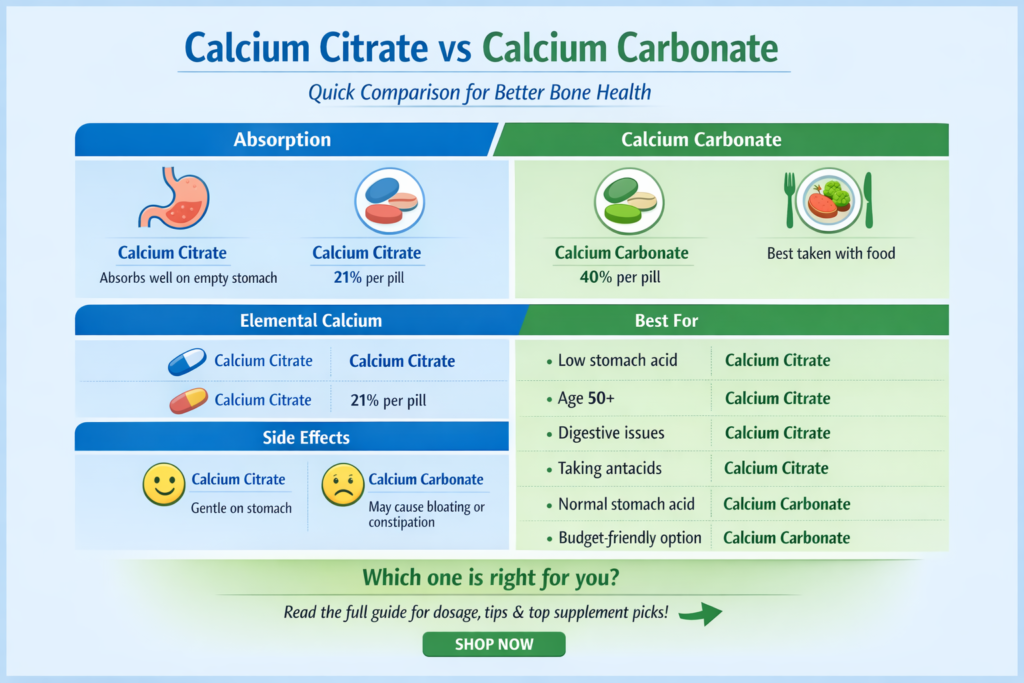
- Calcium citrate absorbs well on an empty stomach.
- Calcium carbonate requires stomach acid and is better taken with meals.
Calcium citrate can be a better option if you take antacids or have gastrointestinal disorders like acid reflux or IBS.
Dosage and Elemental Calcium
- Calcium carbonate contains about 40% elemental calcium.
- Calcium citrate has about 21% elemental calcium.
Because calcium carbonate provides more elemental calcium per pill, you may need to take fewer pills to meet your daily requirement.
Tip:
For better bone support, always pair calcium with magnesium. Explore our article on Magnesium-Rich Foods in the United States.
Recommended Daily Dosage
The recommended daily calcium intake varies by age and gender:
| Age Group | Recommended Intake |
|---|---|
| Women (19–50 years) | 1,000 mg/day |
| Women (50+ years) | 1,200 mg/day |
| Men (19–70 years) | 1,000 mg/day |
| Men (70+ years) | 1,200 mg/day |
Important Tip:
Calcium is best absorbed in smaller doses of 500 mg or less at a time. If you need higher amounts, divide your intake throughout the day for better absorption.
Why Vitamin D Is Important with Calcium
Vitamin D plays a crucial role in helping your body absorb calcium effectively. Without enough vitamin D, your body may not absorb calcium properly, even if you are taking supplements.
For best results, combine calcium supplements with vitamin D through sunlight exposure, diet, or supplements. This combination supports stronger bones, better immunity, and overall health.
Side Effects and Tolerability
Some people may experience constipation, gas, or bloating when using calcium carbonate. In contrast, calcium citrate is generally gentler on the stomach.
Magnesium can help reduce the constipation side effects of calcium. See: Magnesium Deficiency in the United States
Who Should Choose Which?
Here’s a quick comparison to help you decide:
| Situation | Best Choice |
|---|---|
| Low stomach acid | Calcium Citrate |
| Age 50+ | Calcium Citrate |
| Digestive issues (IBS, reflux) | Calcium Citrate |
| Taking antacids | Calcium Citrate |
| Normal stomach acid | Calcium Carbonate |
| Budget-friendly option | Calcium Carbonate |
| Prefer fewer pills | Calcium Carbonate |
Choose Calcium Citrate if
- You have low stomach acid
- You’re over 50
- You have IBS or other digestive issues
- You take antacids
Choose Calcium Carbonate if
- You have normal stomach acid
- You prefer fewer pills
- You want a more budget-friendly option
Product Recommendations (Amazon Affiliate Links)
FAQs: Calcium Citrate vs. Calcium Carbonate
Q1: Which type of calcium is absorbed better?
Calcium citrate is absorbed more efficiently, especially when taken without food.
Q2: Can I switch between different types of calcium supplements?
Yes, you can switch between calcium types, but it’s important to consult your doctor before making any changes to your supplement routine.
Q3: What if I have kidney issues?
Speak with your doctor. Certain supplements might not be appropriate.
Q4: Do I need magnesium with calcium?
Yes, magnesium supports calcium absorption. Learn more here.
Q5: How much calcium do I need daily?
Adults require 1,000–1,200 mg per day, depending on their gender and age.
Q6: Which calcium supplement is best for women?
The best calcium supplement for women depends on age and health needs. Calcium citrate is often recommended for women over 50 or those with digestion issues, while calcium carbonate is suitable for younger women with normal stomach acid.
Q7: Is calcium citrate better than calcium carbonate for absorption?
Yes, calcium citrate is absorbed more efficiently than calcium carbonate, especially when taken without food or by individuals with low stomach acid.
Conclusion: Choose the Right Calcium Supplement for Your Needs
Whether you choose calcium citrate or calcium carbonate, the most important thing is to meet your daily calcium requirements for strong bones, healthy muscles, and proper nerve function. Consider your digestive health, age, lifestyle, and budget when selecting a supplement.
For optimal benefits, pair calcium with magnesium and vitamin D, as these nutrients work together to improve absorption and support long-term bone health. Remember, taking the right calcium supplement consistently is more important than taking a high dose occasionally.
If you’re unsure which supplement is best for you, consult your healthcare provider and explore magnesium-rich foods and vitamin D sources to support your overall health.
Take charge of your bone health today and make an informed choice that fits your needs and lifestyle.
Call to Action
Take control of your bone health today. Choose the right calcium supplement based on your body’s needs—whether it’s calcium citrate for better absorption or calcium carbonate for higher calcium content.
For maximum benefits, don’t forget to combine calcium with magnesium and vitamin D, as these nutrients work together to support strong bones and overall health.
Start by adding magnesium-rich foods to your daily routine—read our detailed guide here: Magnesium-Rich Foods in the United States. Also, learn how Vitamin D supports calcium metabolism in our Vitamin D Guide for Americans.
Looking for the best supplement? Explore our top-rated calcium supplements on Amazon and find the perfect option for your lifestyle.
Healthy bones, happy life!
Disclaimer
This article is for informational purposes only and does not offer medical advice. Always consult your healthcare provider before making changes to your supplement routine.