
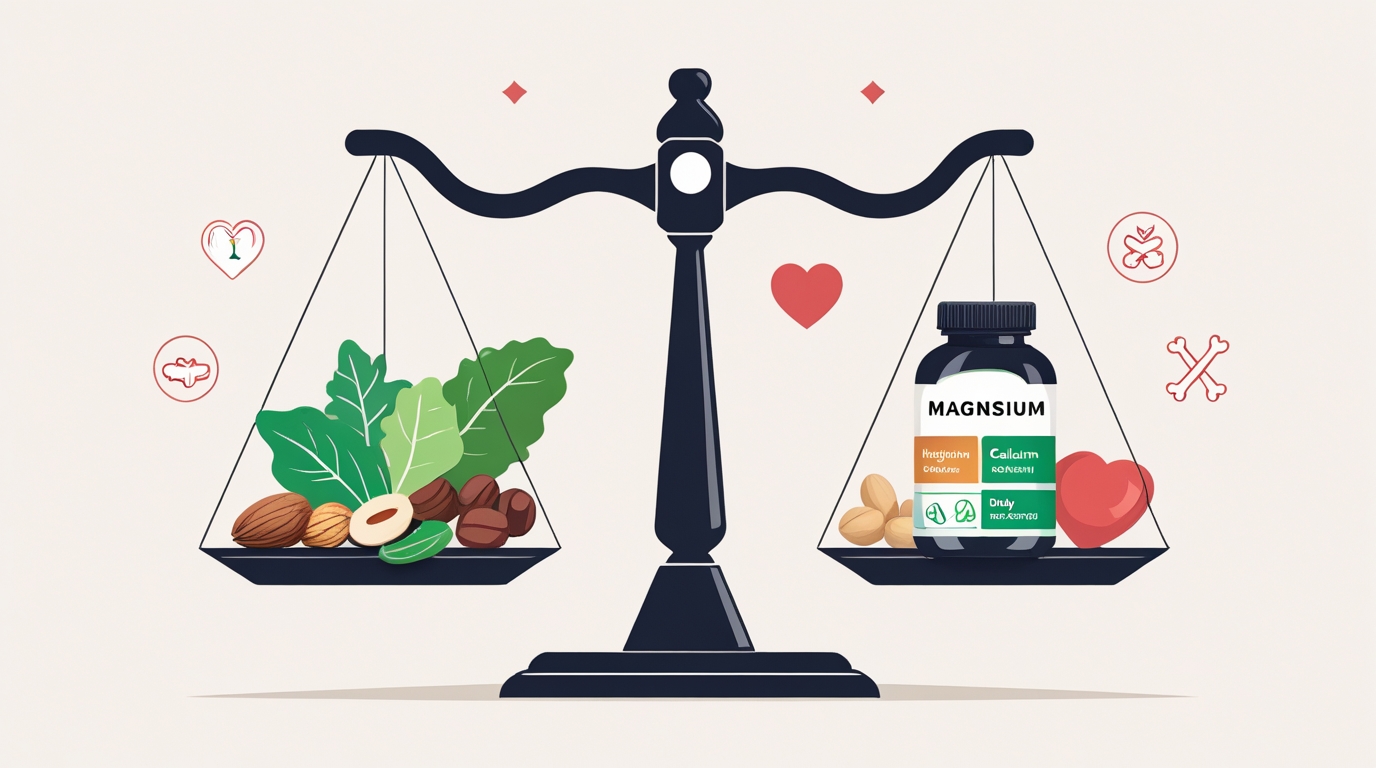
Magnesium vs. Calcium: Which mineral does your body really need more? While both magnesium and calcium are essential for strong bones, healthy muscles, and overall wellness, many people get plenty of calcium but fall short on magnesium. Understanding the differences between magnesium and calcium, their health benefits, recommended intake, and best food sources can help you maintain the right balance for optimal health.
Why Magnesium and Calcium Are Important
Calcium and magnesium are both essential minerals that play unique and complementary roles in your body. Calcium supports strong bones and teeth, helps with muscle contraction, aids nerve signaling, and contributes to heart health. Magnesium, on the other hand, is crucial for over 300 enzymatic reactions, blood sugar regulation, nerve and muscle function, and maintaining a healthy nervous system.
An imbalance—too much calcium and too little magnesium—can affect absorption and lead to serious health problems, such as muscle cramps, heart irregularities, or bone issues. Ensuring a proper balance between magnesium and calcium is key to supporting your overall health and wellness.
Related: Magnesium Deficiency in the United States
Key Functions of Magnesium and Calcium
| Function | Magnesium | Calcium |
|---|---|---|
| Bone & Teeth | Supports formation and absorption of calcium | Builds and strengthens bones & teeth |
| Muscle Function | Helps muscles relax | Supports muscle contraction |
| Blood Health | Regulates blood sugar & blood pressure | Aids in blood clotting |
| Nervous System | Supports nerve signaling | Supports nerve signaling |
| Energy Production | Assists in converting food into energy | – |
Daily Recommended Intake of Magnesium vs. Calcium
Knowing how much magnesium and calcium you need each day is essential to maintain optimal health. Both minerals play unique roles, and getting the right amounts helps your body function efficiently.
Magnesium (according to NIH):
- Adult men: 400–420 mg/day
- Adult women: 310–320 mg/day
Calcium:
- Adults: 1,000–1,200 mg/day
Tip: Excess calcium with insufficient magnesium can lead to muscle cramps, kidney stones, or calcification of soft tissues and arteries. Maintaining a balanced intake of both minerals is crucial for bone health, heart function, and overall wellness.
Pro Tip: Try to get these minerals primarily from food sources like leafy greens, nuts, seeds, dairy products, and fortified foods. Supplements should only fill gaps if your diet isn’t enough.
Common Signs of Deficiency
Knowing the signs of deficiency can help you identify if your body needs more magnesium or calcium.
Magnesium Deficiency Signs:
- Muscle cramps or twitches – Often felt in legs or feet.
- Fatigue or weakness – Feeling tired despite proper rest.
- Anxiety or mood issues – Irritability, restlessness, or difficulty managing stress.
- Irregular heartbeat – Palpitations or abnormal heart rhythms.
- Headaches or migraines – Frequent tension headaches or migraines may indicate low magnesium, as this mineral helps relax blood vessels and regulate nerve function.
Calcium Deficiency Signs:
- Brittle nails and bones – Weak or fragile nails; increased risk of fractures.
- Muscle spasms – Sudden, involuntary contractions.
- Poor dental health – Tooth decay or gum problems.
- Numbness or tingling in fingers – Pins-and-needles sensation in hands or feet.
- Osteoporosis risk – Long-term calcium deficiency can weaken bones and increase the risk of osteoporosis, making bones more prone to fractures.
Tip: If you notice any of these symptoms, consider evaluating your diet and speaking with a healthcare professional about supplements.
Related: Magnesium-Rich Foods in the United States
Shop Calcium Supplements on Amazon
Disclaimer: This is an affiliate link. We may earn a small commission at no extra cost to you if you make a purchase, helping us maintain this website.
Best Food Sources
Magnesium-Rich Foods:
- Spinach, kale, and other leafy greens
- Pumpkin seeds, almonds, and cashews
- Black beans, lentils, and chickpeas
- Avocados and bananas
Calcium-Rich Foods:
- Dairy products: milk, cheese, yogurt
- Leafy greens like kale and bok choy
- Sardines and salmon with bones
- Fortified cereals and plant-based milks
Tip: Combining magnesium-rich foods with calcium sources, like adding almonds to yogurt or spinach to cheese-based dishes, can help your body absorb both minerals more effectively.
Finding the Right Balance
Magnesium plays a crucial role in controlling calcium levels in the body. Excess calcium combined with insufficient magnesium can contribute to muscle cramps, artery stiffness, and high blood pressure.
Although most people in the United States consume adequate calcium, their magnesium intake is often too low because of poor eating habits and limited consumption of magnesium-rich foods. Studies indicate that magnesium deficiency can make it difficult for the body to properly manage calcium levels, which may increase the risk of cardiovascular problems and compromise bone strength.
Practical Advice for Balance:
- Include magnesium-rich foods in most meals.
- Avoid excessive calcium supplementation unless prescribed.
- Pair calcium sources with magnesium to enhance absorption.
Lifestyle Tips:
- Exercise regularly: Helps your bones and muscles utilize these minerals efficiently.
- Stay hydrated: Supports nutrient absorption.
- Limit sugar and alcohol: Both can deplete magnesium levels.
- Pair with vitamin D: Magnesium and vitamin D work together to support bone health.
Related: Magnesium Deficiency in the United States
FAQs: Magnesium vs. Calcium
Q1: Can I take magnesium and calcium together?
Yes, you can take them together, but to avoid absorption problems, it’s important to maintain a balanced ratio between the two minerals. Aim for roughly equal amounts or slightly more calcium than magnesium for optimal results.
Q2: What causes an imbalance?
Extra calcium supplementation, a bad diet, certain drugs, or illnesses such as Crohn’s disease.
Q3: Which mineral is better for anxiety?
It has been demonstrated that magnesium helps regulate mood and lessen the symptoms of anxiety.
Q4: Should I rely on supplements?
Although whole meals are best, if you’re lacking in any of these nutrients, supplements may be helpful; just speak with your doctor first.
Q5: Does age affect magnesium and calcium needs?
Although older adults may need extra calcium to support bone density, they should also monitor their magnesium intake to support absorption and maintain proper balance.
Conclusion: Achieving a Healthy Mineral Balance
Balance is key when it comes to Magnesium vs. Calcium; it’s not about picking one over the other. Although most Americans consume too little magnesium and too much calcium, both minerals are essential. Aim to eat more foods high in magnesium, avoid taking too many calcium supplements, and get individual guidance from a healthcare professional to support your health.
Call to Action
Ready to improve your mineral balance? Start by adding more magnesium- and calcium-rich foods to your meals today. Browse high-quality supplements on Amazon if dietary intake isn’t enough, and don’t forget to share this article to help others stay informed.
Disclaimer
This content is for informational purposes only. It is not intended as medical advice, diagnosis, or treatment. Please consult your healthcare provider before making changes to your supplement or dietary routine.
Written by the team at FitFusionBlogs — your go-to source for balanced health and wellness advice tailored for American lifestyles.